

As an Amazon Associate I earn from qualifying purchases.
The Philips Hue hub (Philips calls it the Hue Bridge) turns ordinary lamps into lights you can control from your phone, by voice or on autopilot. If you can change a light bulb, you can set it up, and there is no wiring to touch.
I’ve run Hue in my own house since 2018, and it is still the smart lighting system I recommend first. This guide covers what the hub and app do, the three types of Hue bulbs, how Hue works with Alexa and SmartThings, where the lights fit best, where they fall short, and what to buy first.
What the Philips Hue hub does
The Hue Bridge is the small white box that plugs into your Wi-Fi router with the included Ethernet cable. Your phone talks to the Bridge over Wi-Fi, and the Bridge talks to every Hue light and accessory over Zigbee, a low-power wireless standard built for smart home devices.
That split matters more than it sounds. Your lights don’t crowd your Wi-Fi, and because Zigbee is a mesh, every mains-powered bulb passes the signal along to the next one. Philips also notes that Hue lights keep working on the Bridge when your Wi-Fi is down.
With a Bridge you get the full system: control from anywhere, automations and timers, rooms and zones, Hue Secure alerts, Hue Sync for TV and music, and the voice assistants. The Bridge is also Matter-compatible, so your Hue lights can show up in other Matter apps. Our guide to Matter and Thread explains what that means in practice.
Hue Bridge vs Hue Bridge Pro
There are two Bridges on sale now. The classic Hue Bridge handles about 50 lights and accessories, which is plenty for most homes. The newer Hue Bridge Pro raises that to 150+ lights and 50+ accessories, stores up to 500 scenes, and adds MotionAware, which uses three or more compatible Hue lights in a room as a motion sensor.
If you’re starting from scratch, buy a starter kit that already includes a Bridge. If you already own a classic Bridge with a handful of lights, it still works fine. Upgrade to the Hue Bridge Pro only when you hit the 50-device limit or want MotionAware. A spare classic Hue Bridge costs much less if you just need a hub for Bluetooth bulbs you already own.
What the Philips Hue app can do
The Hue app is where you add lights, name them and group them into rooms. From there you can switch lights on and off, dim them, and on the right bulbs change the color or the shade of white, one light at a time or a whole room at once.
Scenes are the feature I use most. A scene saves a set of colors, whites and brightness levels for a room, so one tap gets you “Relax” or “Movie night.” The app also has simple automations built in, which may be all you need if you don’t plan to add a separate smart home hub:
- Coming home and leaving. Lights turn on or off based on your phone’s location.
- Wake up. A bedside lamp slowly brightens before your alarm, like a sunrise.
- Go to sleep. Lights fade out slowly at bedtime.
- Timers and schedules. Lights turn on or off at a set time, or after a countdown.
- Security. With Hue Secure, lights can flash or turn on when a Hue sensor is triggered.
The official Philips Hue app page lists the current features for both Bluetooth and Bridge setups. Menus move around between app updates, so look for these names under the Automations tab.
The three types of Philips Hue lights
Hue makes bulbs, lightstrips, lamps and outdoor lights, but every one of them falls into one of three groups. Which group you buy decides what you can control, and it’s the biggest driver of price.
White
Hue White bulbs give one warm white (2700K), fully dimmable. They’re the least expensive Hue lights and the most cost-effective way to add smart lighting to lamps around the house.
White Ambiance
White Ambiance bulbs tune the white from warm to cool. A bright cool white is great for a home office or a workout space, and a warm white helps you wind down at night. They’re my pick for bedrooms and reading lamps.

White and Color Ambiance
White and Color Ambiance bulbs do everything: millions of colors, the full range of whites and smooth dimming. They’re the most capable Hue lights and also the most expensive, so place them where color really adds something.
How I use Philips Hue color lights at home
Color looked like a gimmick to me until I lived with it. These are the ways I actually use the color bulbs, years later:
- Ambiance. A “TV Lighting” scene sets the lamps behind the TV to a soft blue. It’s easier on the eyes than a dark room.
- Warnings. My lights turn red if water is detected in the basement or a door is left open at night. I keep at least one color bulb in each main area so nobody misses it. A smart water leak sensor on the same hub makes this possible.
- Fun. From kids’ birthday parties to the Olympics, we set the color to match the event.
- A gentler alarm. A color bulb in a bedside lamp does a slow sunrise. See our smart alarm clock picks for other ways to wake up gently.
Philips Hue with Alexa and SmartThings
Hue works with Alexa, Google Assistant and Apple Home, and with SmartThings. Once the Bridge is linked, the names you give your lights in the Hue app become their voice names, so pick names that sound natural out loud, like “Family Room Lamp.”
- “Alexa, set the fireplace lights to blue.”
- “Alexa, set the family room lights to 40 percent.”
- “Alexa, turn on Relax in the bedroom.”
For two lamps that always go together, number them (“Fireplace Lights 1” and “Fireplace Lights 2”) and make a group called “Fireplace Lights” in the Alexa app. Our guide to turning on lights with Alexa walks through it, and Alexa routines go further.
SmartThings is where Hue gets really smart. Linked to SmartThings, your lights can come on when a motion sensor sees someone or a door opens, and change color when something needs attention. If you’d rather keep it all in Hue, a Hue Motion Sensor does the motion part on its own.
Where Philips Hue lights work best
Hue bulbs are perfect for lamps, accent lights, recessed cans and lightstrips. I don’t recommend putting them in every fixture. The point of Hue is control by voice and automation, and that stops the moment someone flips the wall switch off.
I keep my Hue lamps switched on at the lamp and let the system do the rest. Adding a lamp to a room is now the easiest way I know to expand smart lighting. Under-cabinet lightstrips in the kitchen are another favorite: tied to motion, they light the counter when you walk in and add a nice glow in the evening.

Where Philips Hue falls short
Every smart bulb needs power. If the wall switch is off, the bulb can’t hear the hub. That’s why I never replaced every light in the house with Hue. For main ceiling lights on a wall switch, a smart switch is usually the better choice, and our complete smart lighting guide compares the options.
If you do use Hue in a switched fixture, a wireless Hue Dimmer Switch stuck next to the old switch gives everyone a button to press. Our roundup of smart buttons and remotes has more options.
Price is the other catch. Color bulbs cost several times what a White bulb does, which makes them impractical everywhere. Use color strategically and fill in with White bulbs. Hue bulbs do last a long time, rated at about 25,000 hours. Read more on how long Philips Hue bulbs last.
Does smart lighting save money?
It did for me, though not on its own. I tracked my bills for the 12 months after adding smart lighting automation and a smart thermostat, and I saved $340.90 over the year compared with the year before, about $28 a month. Every single month used less energy than the same month the year before.

LED bulbs and lights that switch off when nobody’s in the room both help. The thermostat did a large share of the work, so read whether a smart thermostat is worth it if savings are your main goal.
Philips Hue hub and lights: what to buy first
The Hue lineup keeps growing, which makes it hard to know where to start. These are the six products I’d build a Hue system around today, from the starter kit to the first add-ons.
| Product | Best for | Our rating | |
|---|---|---|---|
 Hue Bridge Pro Starter Kit | Best overall starterBridge Pro, three color bulbs and a Tap Dial switch in one box | ★★★★★ 5/5 | Check price |
 Hue Essential Starter Kit | Best value starterClassic Bridge with four color bulbs that dim down to 2% | ★★★★½ 4.5/5 | Check price |
 Hue White A19 4-Pack | Cheapest way to expandFour warm white 2700K bulbs for every lamp you already own | ★★★★½ 4.5/5 | Check price |
 Hue White Ambiance 2-Pack | Best for bedroomsWarm-to-cool white with very low dimming for reading and winding down | ★★★★½ 4.5/5 | Check price |
 Hue Solo Lightstrip 10 ft | Best for under cabinetsCuttable 10-foot RGBWW strip that sticks under cabinets or shelves | ★★★★☆ 4/5 | Check price |
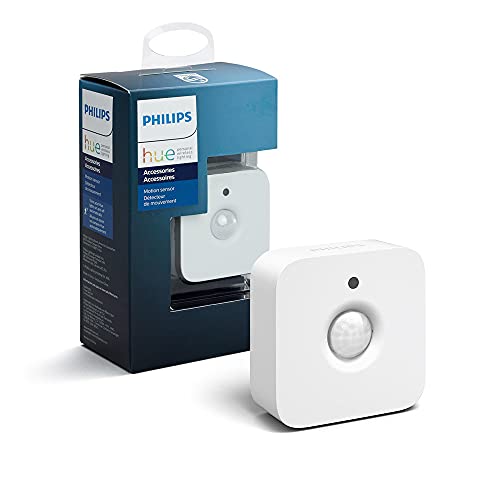 Hue Motion Sensor | Best first automationBattery motion sensor turns lights on when someone walks in | ★★★★☆ 4/5 | Check price |
The star ratings are our own editorial scores for how well each product fits a first Hue setup. Start with one starter kit, live with it for a few weeks, then add White bulbs to more lamps and a strip or sensor where you notice you want one.
Frequently asked questions
Do I need a Philips Hue hub?
Not to try Hue. Bluetooth Hue bulbs work from the app with no hub, but only a few lights in one room and only when your phone is close. For more lights, control from away, automations, accessories and SmartThings, you need a Hue Bridge. Most people end up buying one, so a starter kit is the better deal.
What's the difference between the Hue Bridge and the Hue Bridge Pro?
Both run the same Hue system and app. The classic Bridge handles about 50 lights and accessories. The Bridge Pro handles 150+ lights and 50+ accessories, stores up to 500 scenes, has a faster chip and adds MotionAware, which uses your lights as a motion sensor. Most homes are fine with either.
Do Philips Hue lights work if the Wi-Fi goes down?
Mostly. Lights on a Hue Bridge talk to it over Zigbee, not Wi-Fi, so schedules and Hue accessories like a dimmer switch or motion sensor keep working. App control from away and voice assistants need the internet, so they stop until your connection is back.
Do Philips Hue bulbs work with a normal light switch?
Yes, but the switch has to stay on. When the switch is off the bulb has no power and the app, voice and automations can’t reach it. Leave the switch on and use a wireless Hue switch or a smart wall switch for manual control.
Can Philips Hue work with SmartThings and Alexa at the same time?
Yes. Link the Hue Bridge to both. Light names come over from the Hue app, so Alexa voice commands and SmartThings automations can control the same lights. Keep names unique so neither system gets confused.
I’m getting a bit confused ; what is the difference between a Philips Hue hub and a Philips Hue bridge? Or are they the same?
The bridge and the hub are the same thing for Philips Hue. It is just the device that connects and controls all of the light bulbs.