

As an Amazon Associate I earn from qualifying purchases.
Is a smart thermostat worth it? For most homes with central heating or cooling, yes, as long as you let it set the temperature back while you sleep and while the house is empty. If someone is home all day and you already keep a steady, efficient setting, the savings shrink and payback can take years.
This guide explains what the independent savings data actually shows, how to work out payback for your own bills, and which homes gain the most. If you’ve already decided to buy, our best smart thermostat roundup compares six picks by C-wire needs and Alexa, Google Home, Apple Home and Matter support.
Is a smart thermostat worth it? The short answer, explained
A thermostat doesn’t make your furnace or heat pump more efficient. It saves money one way: by running the system less. A smart thermostat earns its keep by lowering the temperature when nobody needs the heat, then bringing it back before you notice, without you remembering to touch it.
Because heating and cooling is such a big share of the bill, even a modest cut adds up. The question is how big a cut is realistic, and that’s where independent data matters more than the box.
What ENERGY STAR certification actually guarantees
ENERGY STAR doesn’t certify smart thermostats on lab promises. According to its smart thermostat key product criteria, each maker runs EPA software over a year of data from hundreds of real customer homes. To earn the label, the thermostat must show at least an 8% cut in heating run time and 10% in cooling run time, measured as the lower 95% confidence limit of the national average.
ENERGY STAR also sets a floor for typical homes: four out of five homes in the sample must save at least 4% of heating run time and 5% of cooling run time. Certified models also have to work as a plain thermostat if the internet drops, show you how your settings affect energy use, and report monthly run time.
Treat ENERGY STAR's 8% heating figure as a realistic floor and a maker's "up to" figure as the ceiling.
Makers’ claims vs the independent numbers
Thermostat makers advertise much bigger numbers. These are the makers’ own claims, usually measured against leaving the temperature at one setting all day:
- Google says the Nest Learning Thermostat can help save up to 31% on heating and cooling bills.
- ecobee says the ecobee Smart Thermostat Enhanced can save up to 26% per year on heating and cooling costs.
- Sensi says the Sensi Lite Smart Thermostat can save about 23% on HVAC energy.
Those claims aren’t false, but “up to” means some homes saved that much, not that yours will. A house that already ran a tight manual schedule has less waste left to remove.
How to work out your own payback
Payback is the number that answers the question for your house. You need two numbers: what the thermostat costs you, and what it saves you each year.
A worked example
Say your household spends the national average of about $900 a year on heating and cooling. At a cautious 8%, that’s roughly $72 a year. At 15% it’s about $135. Here’s how long different purchase costs take to pay back at those two rates:
| Cost after rebate | Payback at 8% ($72/yr) | Payback at 15% ($135/yr) |
|---|---|---|
| $75 | About 1 year | About 7 months |
| $150 | About 2 years | About 1 year |
| $250 | About 3.5 years | About 1.9 years |
Most smart thermostats last many years, so even the slow case usually pays off well within the device’s life. If your yearly cost is half the average, double every payback time.

When a smart thermostat pays off, and when it doesn’t
The same device can be a smart buy in one house and a slow one next door. These are the patterns that decide it.
A note on heat pumps
Heat pumps can be the exception to deep setbacks. If a big jump in the morning triggers backup electric resistance heat, a setback can cost more than it saves. ENERGY STAR now requires certified thermostats to report how much resistance heat heat pump homes use, so pick one that lists heat pump support and use gentle setbacks of a few degrees.
What to do next
If the payback math works for you, pick a model that fits the platform you already use. Alexa homes should start with our Alexa compatible thermostats, and hub users with our Z-Wave thermostat picks. For Apple Home or mixed setups, our Matter explainer covers what Matter support means.
If you want the fastest payback, keep the price low. The Sensi Lite Smart Thermostat is ENERGY STAR certified and handles the features that do the saving: schedules, geofencing and usage reports. It works with Alexa and needs no C-wire in most homes.

Sensi Lite Smart Thermostat
A low-cost way to get schedules, geofencing and usage reports
ENERGY STAR certified, works with Alexa, and needs no C-wire in most homes. Heat pump, heating-only and cooling-only systems need a C-wire or power accessory.
If you’d rather not program anything, occupancy sensing does the setbacks for you. The ecobee Smart Thermostat Enhanced notices when people are home, learns your schedule, and ships with a Power Extender Kit for homes without a C-wire. It works with Siri, Alexa and Google Assistant.
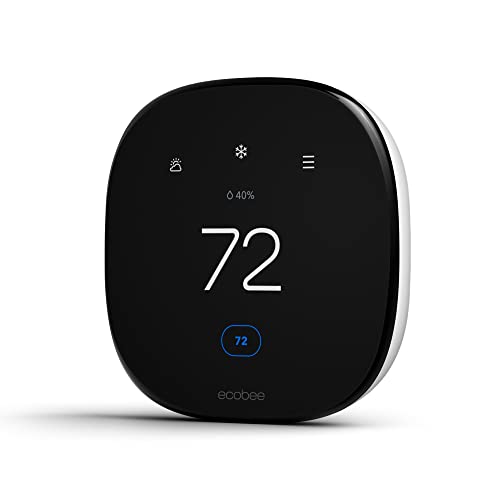
ecobee Smart Thermostat Enhanced
Occupancy sensing sets back the heat without a schedule to manage
Detects when people are home, learns your preferences, works with Siri, Alexa and Google Assistant, and includes a Power Extender Kit for homes without a C-wire.
A smart thermostat only covers heating and cooling. To find what else drives your bill, energy-monitoring smart plugs show what individual appliances use.
Frequently asked questions
How much does a smart thermostat save per year?
It depends on your bill and habits. ENERGY STAR certified models must show at least an 8% cut in heating run time and 10% in cooling across hundreds of real homes. On the national average bill of about $900 a year, 8% is roughly $72. Makers claim up to 23-31%, but those are best-case figures.
Is a smart thermostat worth it if I work from home?
Less so, because the away setback is where much of the saving comes from. You can still save with a sleep setback and by heating only the room you use. Check whether your bill is large enough for even 5-8% to pay back the cost in a few years before you buy.
Is a smart thermostat worth it for a heat pump?
Often yes, but choose one that lists heat pump support and use small setbacks. A large morning recovery can trigger backup electric resistance heat, which can wipe out the savings. Many heat pump systems also need a C-wire or power adapter.
Are smart thermostats better than programmable ones?
A programmable thermostat can save the same energy if you program it and leave it alone. Smart models add remote control, geofencing, occupancy sensing and usage reports, which help people who never kept a schedule going. If you already run a strict schedule, the upgrade saves less.