

As an Amazon Associate I earn from qualifying purchases.
Alexa smart home automation lets you run your lights, thermostat, locks, garage door and TV by voice, or on a schedule with no voice at all. “Alexa, turn on the lights. Set the temperature to 68. Close the garage.” It is the closest thing to the movie version of a smart home that most of us can buy today.
I have used Echo devices since the first Echo shipped in late 2014, and today there is one in almost every room of our house. This guide covers what Alexa can control, when you need a hub, how to set it up in six steps, the routines worth building first, and the Echo devices that work best for it. Setup takes about an hour for a first room.
What Alexa smart home automation can control
Before voice control, every smart device came with its own app. Turning on the lights meant opening the lighting app, and changing the temperature meant opening the thermostat app. Alexa pulls them into one place, so you can control them by voice, from the Alexa app, or from a routine.
- Lights and switches: on, off, dimming, color and scenes. See how to turn on the lights with Alexa.
- Plugs: lamps, fans, coffee makers and anything else with a physical on/off switch.
- Thermostats: set a temperature or ask what it is inside.
- Locks, garage doors and cameras: lock up, check the garage, or view a camera on a screen.
- TV and entertainment: turn on the TV, change channels and play music in any room.
- Odd jobs: even feeding your pet by voice with a compatible feeder.
How my family uses it every day
Here is the short list from our house. The Echo started as a smart home remote, but it ended up doing far more than that:
- Lights on and off, plus scenes like Relax and TV lighting
- Turning on the TV and changing channels
- The weather forecast and the temperature inside
- Cooking timers, and a kids’ timeout timer we use far too often
- Reminders, one-time and recurring, from the school bus to vitamins
- Drop In on the kids’ rooms to say dinner is ready
- Music from Amazon Music, Pandora, Spotify and others (set an Alexa preferred speaker for better sound)
The kids have an Echo Dot in their bedrooms for alarms, music and homework questions. That habit of talking to the house is what makes automation stick.
Do you need a smart home hub for Alexa?
It depends on how your devices connect. Most smart plugs, bulbs and cameras sold for Alexa use Wi-Fi and connect straight to your router, so any Echo can control them with no hub. Devices that use Zigbee or Thread need a hub to talk to, and several current Echo models have one built in.
Matter is the newer standard that lets one device work with Alexa, Google Home and Apple Home. The Connectivity Standards Alliance, which runs Matter, describes it as an IP-based protocol for devices that work reliably together. Look for the Matter logo if you want to keep your options open.
In my home, scenes run through SmartThings took a second or two longer by voice than in the SmartThings app itself. Single devices turned on and off with no noticeable delay.
What you’ll need
Start with an Echo in the kitchen or living room, where you will use it every day. Those rooms are also the best place to start your smart home lighting.
How to set up Alexa smart home automation
These are the steps I use for every new room. Menu names move a little between Alexa app versions, but the order stays the same.
Say each new device’s name out loud a few times right after you add it. If Alexa mishears it, rename it now, before it ends up in five routines.
Routines worth building first
Routines are where voice control becomes real Alexa home automation. A routine starts from a trigger, such as a phrase, a time, a sensor or your phone’s location, and runs a list of actions. These are the ones my family uses most:
- Good morning: at 6:30 a.m. on weekdays, turn on the kitchen lights, read the weather and start the news.
- Movie night: “Alexa, movie time” dims the living room lights and turns on the TV.
- Leaving home: when your phone leaves home, turn off the lights and lower the thermostat.
- Bedtime: turn off the downstairs lights, check the locks and turn on Do Not Disturb in the bedrooms.
- Spoken alerts: add an Alexa Says action so your Echo tells you the garage was left open or the laundry is done.
Spoken alerts used to be the one thing I wished for. Years ago I needed separate speakers for audible notifications from my hub. Now the same Echo devices around the house can be the voice of the home.

Common setup mistakes
Most problems with an Alexa smart home come down to a few habits. Fix these before you blame a device.
- Two devices with the same name. Alexa asks which one you mean, or picks the wrong one.
- Names that sound alike. “Den Light” and “Dan’s Light” will get mixed up.
- Devices on a weak Wi-Fi signal. A plug in the garage that drops offline will break every routine that uses it.
- Routines with no test run. Tap the play button on a new routine before you trust it.
- Too much at once. Add one room at a time so you know what broke if something does.
Privacy and the microphone
An Echo listens for its wake word, and that is a fair thing to think about before you put one in every room. Every Echo has a microphone off button that disconnects the mics, and the Alexa app lets you review and delete voice recordings.
If you’d rather not have a microphone in a room, a smart plug or switch can still run on a schedule from a routine. It just won’t hear you.
Best Echo devices for Alexa smart home automation
Any current Echo can control Wi-Fi smart devices. The difference is the speaker, the screen, and whether it has a built-in smart home hub for Zigbee and Thread devices. Use a bigger speaker in the main rooms where you play music, and an Echo Dot to add voice control to every other room.
| Product | Best for | Our rating | |
|---|---|---|---|
 Amazon Echo Dot Max | Best overallBuilt-in smart home hub, fuller sound, presence-triggered routines | ★★★★½ 4.5/5 | Check price |
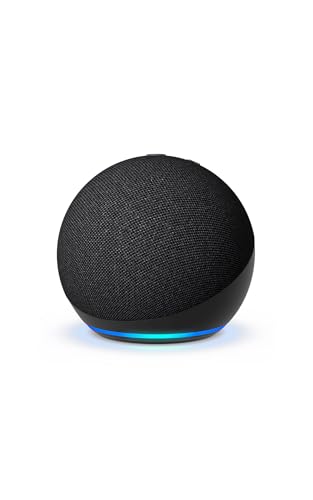 Amazon Echo Dot | Best for every roomSmall and affordable, with motion and temperature sensors for routines | ★★★★½ 4.5/5 | Check price |
 Amazon Echo Show 8 | Best with a screen8.7-inch touchscreen for cameras and controls, with a built-in hub | ★★★★½ 4.5/5 | Check price |
 Amazon Echo Hub | Best control panel8-inch dashboard for devices, cameras and routines; Zigbee, Thread, Matter | ★★★★☆ 4/5 | Check price |
 Amazon Echo Studio | Best soundSpatial audio for the living room, plus a built-in smart home hub | ★★★★☆ 4/5 | Check price |
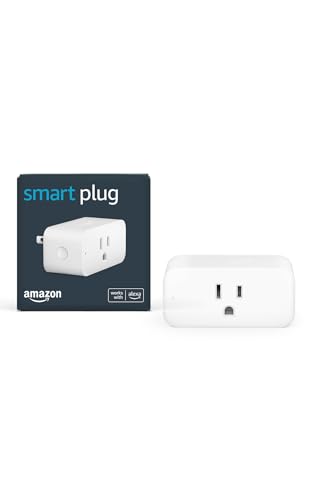 Amazon Smart Plug | Best first deviceNo hub needed; turns any lamp or fan into a smart device | ★★★★½ 4.5/5 | Check price |
The star ratings are our own editorial scores for how well each pick fits Alexa smart home automation. For a model-by-model comparison, see which Echo you should buy, and for stands and mounts, our Echo Dot accessories list.
Our pick for the main room
The Echo Dot Max is the one I’d put in a kitchen or living room today. It has a built-in smart home hub, fuller sound than the regular Echo Dot, and presence and temperature detection that can start routines on its own.
Amazon Echo Dot Max
A built-in smart home hub and room-filling sound in a small speaker
Controls lights, locks and thousands of Alexa devices without a separate hub, and can start routines from presence or temperature. It also works as an eero mesh Wi-Fi extender.
A control panel for the whole family
Voice isn’t always the easiest way, especially for guests or kids. The Echo Hub is an 8-inch panel that shows your devices, cameras and routines in one dashboard, and its hub works with Zigbee, Thread and Matter devices.
Amazon Echo Hub
One wall-mounted dashboard for every light, lock and camera
An 8-inch panel you can arrange into sections for devices, cameras and routines, with a built-in hub for Wi-Fi, Bluetooth, Zigbee, Thread and Matter devices.

The easiest first device
If you have an Echo and nothing else, start with the Amazon Smart Plug. It needs no hub, sets up in the Alexa app, and turns a lamp or fan into your first routine.
Amazon Smart Plug
The simplest way to start Alexa home automation with what you own
Plugs into any outlet and sets up in the Alexa app with no hub. Use it with a lamp, fan or coffee maker, on a schedule or in a routine.
Ready for more? Pair Alexa with Philips Hue lights, connect a Ring doorbell, or add one of our best smart locks.
Frequently asked questions
What is Alexa smart home automation?
It is using Alexa to control smart devices by voice, from the Alexa app, or automatically with routines. A routine runs actions from a trigger such as a phrase, a time, a sensor or your phone arriving home. For example, it can turn on the porch light at sunset without anyone asking.
Do I need a hub for Alexa smart home devices?
Not for Wi-Fi devices, which connect to your router and work with any Echo. Zigbee and Thread devices need a hub, and the Echo Hub, Echo Show 8, Echo Dot Max and Echo Studio have one built in. An existing hub like SmartThings also links to Alexa with its skill.
Is there a monthly fee for Alexa smart home control?
No. Controlling smart devices and running routines with Alexa has no monthly fee. Some device makers charge for their own extras, like camera recording plans, and those are separate from Alexa.
Can Alexa routines run without a voice command?
Yes. A routine can start at a set time, at sunrise or sunset, when a sensor sees motion, or when your phone leaves or arrives home. Echo Dot models can also start routines from their built-in motion or temperature sensors.
Which Echo is best for smart home control?
For a main room, the Echo Dot Max gives good sound and a built-in smart home hub. The Echo Show 8 adds a screen for cameras and controls. For every other room, a regular Echo Dot is enough to add voice control.