

As an Amazon Associate I earn from qualifying purchases.
Alexa for seniors works because there is nothing to learn but your own voice. You say “Alexa,” ask for what you want, and an Amazon Echo speaker or display does it: no small buttons, no menus and no phone screen to squint at.
This guide explains which Echo suits an older adult, how to set one up (or set it up for a parent), the everyday commands that help most, and, just as important, what Alexa cannot do in an emergency. We first wrote it in 2020 and have rewritten it for today’s devices and Alexa+.
What is Alexa, and which Echo should a senior get?
Alexa is Amazon’s voice assistant. It lives inside Echo devices: small speakers such as the Echo Dot, and smart displays such as the Echo Show, which add a touchscreen and a camera. You talk, Alexa answers out loud, and on a display it also shows the answer in large text.
Alexa+ is the newer, more conversational version of Alexa. It is included with Amazon Prime, and Amazon charges non-Prime members $19.99 a month for it. Classic Alexa features such as reminders, calls, music and smart home control work without it.
| Product | Best for | Our rating | |
|---|---|---|---|
 Echo Show 8 | Best for most seniors8.7-inch screen for big text and easy, auto-framing video calls | ★★★★½ 4.5/5 | Check price |
 Echo Show 5 | Best for the nightstandCompact 5.5-inch display with camera shutter for bedside calls | ★★★★½ 4.5/5 | Check price |
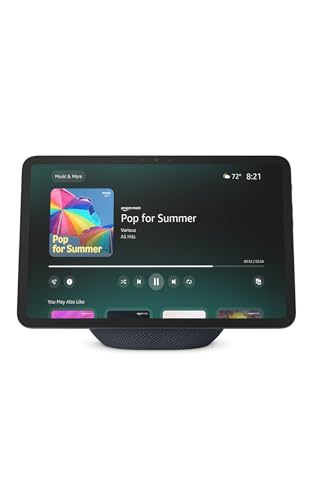 Echo Show 11 | Easiest to readLargest 11-inch Full-HD screen, easy to read across a room | ★★★★☆ 4/5 | Check price |
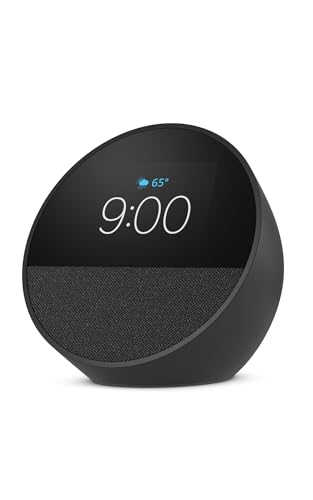 Echo Spot | Best clock with AlexaSmart alarm clock that shows time, weather and reminders | ★★★★☆ 4/5 | Check price |
 Echo Dot | Best voice-only speakerSmall, simple speaker for reminders, music and news by voice | ★★★★☆ 4/5 | Check price |
For most older adults we suggest a display. Seeing the time, the weather and a caller’s face makes Alexa easier to trust and easier to use, and the screen helps anyone with some hearing loss. Pick a speaker if the person only wants music, news and reminders. Our full Echo buying guide compares every model.
Echo Show 8
Big, clear screen for video calls, photos and large-text answers
An 8.7-inch HD smart display with an auto-framing camera for video calls, a photo slideshow when idle, a built-in smart home hub and a camera and mic off control.
Why Alexa for seniors works so well
Most technology asks older adults to adapt to it. Alexa adapts to them: it understands normal speech, it never gets impatient, and it does the same thing every time you ask the same way.
Hands-free help for stiff or sore hands
Arthritis is common later in life, and it makes buttons, dials and touchscreens harder to use. With Alexa there is no need to write, dial a number or type. You can ask how many teaspoons are in a tablespoon, set a kitchen timer or turn on a lamp with your hands full.
Easier with weaker eyesight
Alexa reads the forecast, the news and your calendar out loud, so there is no need to find your glasses. On an Echo Show, the text is large and high-contrast, and the bigger Echo Show 11 is the easiest to read from across a room.
Fewer trips up and down the stairs
Getting out of bed to switch off a light or climbing the stairs to change the thermostat are small jobs that carry a real fall risk. With smart lights or a smart thermostat connected, Alexa does those jobs by voice. Our guides to turning on lights with Alexa and Alexa-compatible thermostats show what to buy.
Staying independent at home
In AARP’s 2018 Home and Community Preferences survey, 76% of Americans aged 50 and older said they would prefer to stay in their current home. Alexa will not replace a caregiver, but it can make living alone safer and less lonely, with reminders, calls and a voice that answers.

How to set up Alexa for a senior
Setup takes about 15 minutes and needs a phone or tablet with the free Amazon Alexa app, an Amazon account and the home’s Wi-Fi password. Many families do it for a parent during a visit.
Before you leave, practice a few commands together and write them on a card by the Echo. A short list of the best Alexa commands is a good place to start.
Alexa for seniors: everyday uses and commands
These are the Alexa for seniors features older adults tend to use every day, with the exact words to say.
Medication and appointment reminders
Taking pills on time matters, and juggling several schedules is hard for anyone. Say “Alexa, remind me to take my blood pressure pill every day at 8 a.m.” and Alexa will announce it daily. One-off reminders work too: “Alexa, remind me about the dentist on Tuesday at 10.”
Hands-free calls and video calls
Alexa can call people in your contacts by voice: “Alexa, call Mary.” On an Echo Show, calls to family members who have the Alexa app or their own Echo Show can be video calls, so a grandparent sees the grandkids without holding a phone.
Drop In lets approved contacts connect to an Echo instantly, like an intercom. It is useful for checking on a parent, but only turn it on for people the senior fully trusts, and only with their agreement.
Lists, shopping and the news
Say “Alexa, add milk to my shopping list” and the list appears in the Alexa app for whoever does the shopping. For the news, “Alexa, what’s the news?” plays a short briefing from sources you choose in the app, and “Alexa, what’s the weather this weekend?” answers before you get dressed.
Music, audiobooks and games
“Alexa, play music from the 1960s” or “Alexa, play Frank Sinatra” beats fiddling with CDs or a TV remote. Alexa can also read Audible books aloud, play radio stations and run trivia games, which many people enjoy as company during the day.
Lights, heat and locks by voice
Connect smart devices and Alexa can switch a lamp on, turn up the heat or check the front door. The cheapest start is an Amazon Smart Plug on a bedside lamp, so “Alexa, turn on the bedroom lamp” lights the way at night. A smart lock answers “Alexa, is the front door locked?” from the sofa.

Safety: what Alexa can and cannot do in an emergency
This is where families need a straight answer, because the old idea that Alexa can summon help on its own is not quite right.
Alexa also only helps if the person can reach it by voice and the Wi-Fi and power are on. For someone at real risk of falls, a medical alert pendant or watch with fall detection is the safer choice, with Alexa as a helpful extra, not the backup plan.
Alexa can still make a home safer in quieter ways: lights that come on by voice at night, reminders for the stove, and alerts from a smart water leak sensor under the sink.
Alexa tips and tricks for seniors
A few settings make Alexa even easier for an older adult to live with.
- Ask Alexa to slow down: say “Alexa, speak slower” if replies come too fast, and “Alexa, speak faster” to undo it.
- Change the wake word: if a family member is also named Alexa, switch it to “Echo” or “Computer” with our guide to changing Alexa’s name.
- Turn up the volume: say “Alexa, volume eight” (the scale runs from 0 to 10).
- Ask for traffic and hours: “Alexa, is the pharmacy open today?” saves a phone call.
- Add a button: for someone who finds talking to a device awkward, smart buttons can start a routine or call with one press.
Frequently asked questions
Is Alexa good for seniors?
Yes, for most older adults. Alexa works entirely by voice, so there are no small buttons or menus to learn, and it helps with reminders, calls, music, news and smart home control. It works best when a family member does the setup and leaves a short list of commands beside the device.
What is the best Echo for seniors?
For most seniors, the Echo Show 8. Its 8.7-inch screen shows large text and makes video calls easy, and it doubles as a photo frame. The Echo Show 5 is a smaller, cheaper option for a nightstand, and the Echo Show 11 has the biggest, easiest-to-read screen.
Can Alexa call 911?
Not with standard Alexa calling. You can ask Alexa to call a family member or neighbor, who can then call 911. Amazon’s paid Alexa Emergency Assist subscription in the U.S. adds a live agent who can contact emergency services, but it depends on Wi-Fi and power, so keep a phone or medical alert device nearby.
Do seniors need Amazon Prime to use Alexa?
No. Reminders, calls, music, news and smart home control all work without Prime. Prime adds free Alexa+, the newer conversational version, which otherwise costs $19.99 a month, and access to Amazon Music Prime and Prime Video on an Echo Show.
Can I set up Alexa for my parent from my phone?
Yes. Sign in to the Alexa app with your parent’s Amazon account, add the Echo and connect it to their Wi-Fi, which is easiest during a visit. Using their account keeps their reminders, lists and contacts separate from yours.